

For example, if a grocery store consistently marks up items by 50% of the wholesale price, this method is effective. However, if the markup percentage varies greatly, such as 10%, 25% or 40%, then it’s more difficult to use the retail method accurately. In the world of retail, where profit margins can be slim and competition fierce, mastering the basics of accounting and bookkeeping is non-negotiable. From tracking sales and managing inventory to complying with tax regulations, every aspect plays a crucial role in the financial success of a retail business.
The Booming Industry of Biohacking: What It Means for Fitness and Health
- This inventory valuation technique averages the cost of all items without worrying about the order in which the inventory was purchased.
- Of course, using the retail method, for this reason, has a problematic implication.
- We’ll delve into the core concepts of retail accounting, equipping you with the knowledge and actionable insights to confidently navigate your finances.
- Under this method, you assume you sold all of week 1 items for $10 each and 15 from week 2 at $20 each for a total of $500.
- A retail business can cover anything – from apparel to food supplies to home decor and even auto.
- You need to take care of the books so you can see how each of your stores is performing, and so you can compile the figures for your quarterly BAS returns.
- When it comes to P&L reporting, Synder gathers transactions in great detail—from payment processing fees to extensive customer and product data like names, locations, and SKUs.
The retail method is a simplified way to estimate the cost of ending inventory. It involves applying a predetermined cost percentage to the retail value of goods on hand. This percentage typically reflects the historical relationship between the cost and retail prices of inventory items. This method is particularly useful for businesses with a large number of products and frequent inventory turnover. If 50 apples were originally purchased for $5, and then another 50 apples were purchased (or produced) for a total cost of $7.50, FIFO would assign a price of $5 to the first resold item. After selling 50 apples, the new cost of the fruit will be $7.5, since it’s assumed that the oldest item is sold first.
AI Agents and Their Role in Inventory Management
- Everything flows smoothly, giving you the clarity you need for decision-making.
- The combination of high transaction volumes, diverse revenue streams, and complex regulatory requirements demands systematic approaches and robust technology solutions.
- Accounting for the cost and value of inventory also provides businesses with accurate inventory valuations and balance sheets.
- You can either opt for physical inventory counts or cycle counting (an ongoing system to count inventory or every aisle).
- The debt-to-capital ratio measures debt used in a company’s capital structure.
- The retail method is all about estimating ending inventory without counting every single item individually.
- The higher the ADS, the more profitable the business is likely to be, as it indicates that customers are spending more money per transaction.
This inventory-tracking method requires you to manually count and track inventory periodically, such as weekly or monthly. A major drawback of this method is that, because you don’t have a POS system tracking your sales, you don’t have a way to determine what items were sold, stolen or broken. If, for example, a game store employee accidentally breaks retail accounting basics a collector’s figurine or items are stolen, the POS system can’t account for the loss.
RetailBasics Retail Management Software
Second, it allows accountants to spend less time on routine tasks and more time analyzing problems and advising on business growth. Typically, the retail price of the inventory is reduced by the markup percentage in order to arrive at an approximate value. If you’re a net sales retailer, you likely use at least a couple of the methods we’ve discussed in this article. The retail method of accounting in particular is simple, convenient, and can save you time in the long run, but it’s not without drawbacks. All businesses use some form of financial accounting, as these statements serve a purpose both internally and externally, providing detailed data on all business transactions.
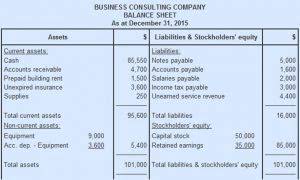
You can find QuickBooks ProAdvisor more details of each feature in the panels below and by clicking through to the feature page. In retail accountancy, one needs to use the upgraded technological tools but also needs to manage the records outside of the software. To better track the inventory management, expenses, and revenue, it is vital to keep track of the receipts, manage the sales records, loan statements, and proper bank information. We know that financial reports are far more than just paperwork; they’re a compass pointing towards our financial health. To maintain and improve our profitability, we closely track essential metrics like net profit and gross margin. Financial statements, especially income statements and balance sheets, reveal our performance at a glance and guide our decisions.
- This costing method is most often used when inventory is perishable and is a favorite for food retailers.
- After you’ve entered all of your retail store financial information into your accounting software, you can generate financial reports.
- This simplifies calculations and reduces the need for physical stock counts.
- Digital solutions such as retail accounting software can automate most of the financial and inventory operations to minimize errors and streamline processes.
- Accurate revenue recognition is essential to ensure that sales are recorded at the correct time and reflect actual income.
Synder lets you automatically synchronize multichannel data into accounting platforms like QuickBooks Online, QuickBooks Desktop, Sage Intacct, and Xero. You can choose to sync this data either as daily journal entries or in detailed transactions. If you sell offline, you’ll have to acquire a POS system where each item will be assigned a barcode. When the item is sold and you scan its barcode, the numbers in your inventory will update automatically.
Managing Sales and Revenue

In this situation, you may want to use the weighted-average costing method by dividing the total cost of the dice by the total number of dice you purchased. You bought 30 dice at 5 cents apiece, then purchased a second order of 25 dice at 7 cents each and a last order of 15 dice at 10 cents each. Only 20 are left at the time you track your inventory, and you’re not sure what cost to assign to the 50 dice you’ve sold. “Price and markup changes make retail accounting much less accurate, and many industries are dealing with those right now. The IRS allows you to use any method you want to value your inventory for tax purposes. The caveat is, once you choose a method you have to stick with it, unless you get permission from the IRS to change your costing method.
How Retail Accounting Software Can Help Your Business
Retail accounting refers to a set of methods to assess the value of your inventory. There are several different formulas to compute retail accounting figures, but almost all examine the cost of goods sold (COGS). Accounting for the cost and value of inventory also provides businesses with accurate inventory valuations and balance sheets. Ideally, performing retail accounting calculations will allow you to make assessments about your stock without having to constantly do manual counts. Retail accounting refers to methods of tracking inventory from a stock and monetary perspective. It involves all the numbers and formulas that tell you how much money you have invested in your stock and your profit margins.