
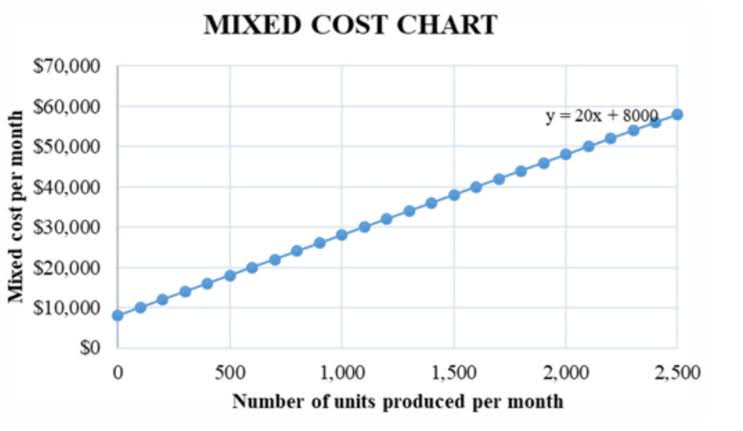
This allows your business to become more cost-efficient as it grows, https://www.bookstime.com/ resulting in higher profit margins. This calculates the total fixed costs by taking the total costs and subtracting the variable costs, which depend on production volume. Variable costs fluctuate as output levels change, as was previously noted.
How do fixed costs affect profitability?
Lets take a deeper look at both Debt to Asset Ratio and use examples to fully understand how they work. Therefore, we can calculate the Fixed Cost of production for XYZ Shoe Company in March 2020 as. These four terms are related and explain why a business incurs a particular cost.
Sales commissions
For this reason, it’s a good idea to calculate your breakeven point regularly to adjust your sales goals accordingly. Fixed costs are usually established by contract agreements or schedules. As an example, for rent payment, there is a specific agreement that specifies the duration and the fixed amount which the company should pay. Let’s break down exactly how to calculate fixed cost, with an example and a calculator. It is a recurring cost that is typically the same amount every period. Buildings and machinery depreciate in value, but land does not depreciate.
How to Calculate a Fixed Cost Formula
Fixed costs can be understood as the types of expenses the company must pay, which are not dependent on any specific how to calculate fixed cost business activities. Fixed costs are generally considered as indirect costs since it is not applied to a company’s production level of any goods or services. These costs are constant over a specified time and the amount does not change with production output levels. Analyzing how these costs interact can help you determine your breakeven point and profitability. As production increases, fixed costs will generally stay the same, while most variable costs will increase.
- In the column to the right – “Fixed Cost Per Unit” – we must divide the total fixed cost by the coinciding production units, which increases by 100 in each row.
- These four terms are related and explain why a business incurs a particular cost.
- These are known as fixed costs and typically include rent, insurance, employee salaries, subscriptions, and other contractual payments.
- The fact that the variable cost is constant might seem counterintuitive but remember that the table measures the cost on a per-unit basis.
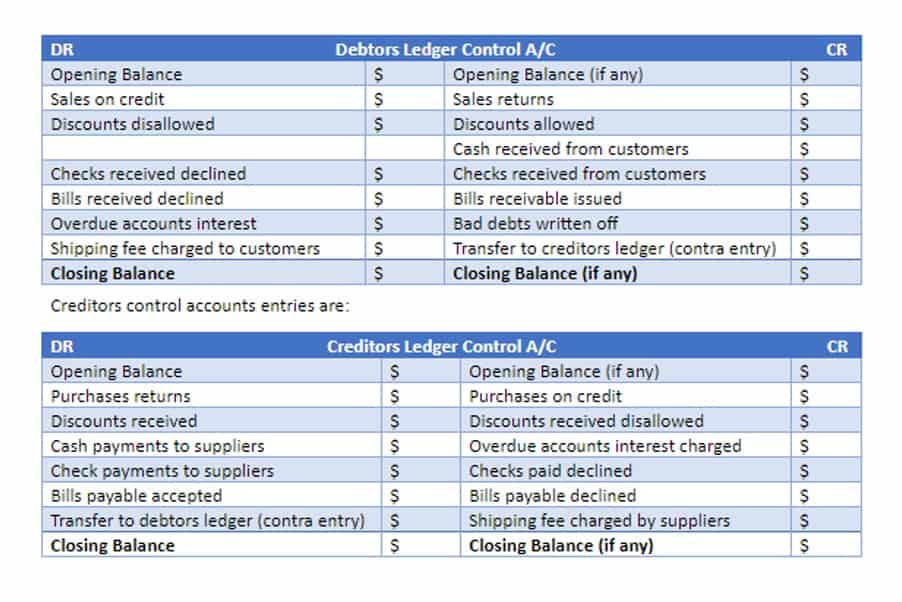
For instance, businesses may seek to optimize the use of fixed assets, such as machinery and facilities, to ensure they are utilized effectively and do not become a financial burden. Since service industries lack large equipment and direct materials, overhead costs make up a larger share of total expenses. Careful allocation across departments/projects is key for accurate cost structures. In keeping with this concept, let’s say a startup ecommerce business pays for warehouse space to manage its inventory, and 10 customer service employees to manage order inquiries. To conclude, I would like to say that keeping a close eye on your fixed costs is vital, and this is where accounting software like Deskera Books would be of assistance to you. Almost all businesses are required to pay rent or mortgage payments for real estate.
Example 1: Manufacturing Company
- One powerful tool that can significantly aid in managing and calculating both fixed and variable costs is Deskera ERP.
- Analyzing how these costs interact can help you determine your breakeven point and profitability.
- If the company scales and produces more widgets, the fixed cost per unit declines, giving the company the flexibility to cut prices while retaining the same profit margins as before.
- For example, if you run a bakery, the cost of flour, sugar, and other ingredients used in making cakes would be considered direct costs.
- This is the idea that every unit bought and sold adds Revenue and (variable) costs to the P&L.
- Understanding and managing your fixed costs is crucial for your business’s financial health.
Fixed and variable cost analysis is vital to finding operating leverage, which measures if a company’s operating income increases when sales revenue grows. Imagine a small candle manufacturing business spending ₹ 20,000 monthly on fixed costs. A fixed cost structure enables business owners to adjust variable expenses and better manage costs. For example, an organization expecting to spend more on raw material sourcing during the next fiscal year can negotiate rental agreements to reduce fixed business costs.
Insurance
The raw materials needed to make each product, selling commissions for every sale, or shipping costs per unit are a few examples of variable costs. Semi-fixed costs or mixed costs are other names for semi-variable expenses. Up to a certain level in manufacturing, they are fixed; beyond that, they are changeable.

- However, certain fixed costs, such as long-term liabilities (e.g. loans or leases) and depreciation, are indirectly represented.
- For example, if the fixed costs are $50,000, the unit sale price is $100, and the variable cost per unit is $60, the breakeven point will be 1,250 units.
- In short, the average cost per unit decreases as output increases, because fixed costs can be “spread” across a higher quantity of production units.
- Fixed costs necessitate careful cash flow management to ensure that the business can meet its financial obligations consistently.
- High fixed costs encourage businesses to maximize capacity utilization to spread costs over more units and achieve profitability.
- Although the high-low method is easy to apply, it is seldom used because it can distort costs, due to its reliance on two extreme values from a given data set.
This average fixed cost would be an amount it costs to produce the unit or service, regardless of how many are sold. Fixed costs are your expenses that are not affected by your business’s sales or production. In other words, fixed costs are independent of business activity and can also be known as overhead or indirect costs. For example, if a business incurs $30,000 in fixed costs per month and produces 2,000 units, the AFC is $15 per unit ($30,000 / 2,000). If production increases to 3,000 units, the AFC drops to $10 per unit, and at 5,000 units, it falls further to $6 per unit. The AFC never reaches zero but consistently decreases as fixed costs are spread over a larger number of units.

This knowledge is essential for setting accurate pricing, planning for the future, and, ultimately, ensuring your business’s financial stability. Yes, fixed expenses remain “fixed” regardless of your business activity, sales, and production. If an expense fluctuates with these variables, it is called a “variable cost”. You can count on fixed costs to be relatively stable from month to month but they do not always stay exactly the same due to inflation and other reasons. Average fixed costs can be determined by adding the fixed costs of production up and then dividing that number by the quantity of output produced.
- Now, subtract the value from the total production cost to find the fixed cost.
- Through predictive analytics, businesses can anticipate fluctuations in variable costs and plan accordingly, improving budgeting and profitability.
- For example, after accounting for revenue and the cost of goods sold (COGS), which include variable costs, fixed costs are listed as operating expenses.
- Examples of fixed costs include rent, insurance, administrative salaries, depreciation, etc.
- The increase in production enables them to produce more items and spread the fixed expense over more outputs.
- Fixed costs are usually established by contract agreements or schedules.
Locate the expense section
Numerous expenses are covered under maintenance, such as those cleaning supplies, mechanical repairs, or yearly tune-ups for automobiles. Most of the time, this expense is constant and occurs on a predetermined schedule. It’s important to remember that your costs and selling prices will change over time.